
Short Podcasts: The Power of Bite-Sized Audio Content

The podcasting landscape has evolved dramatically, and one of the most significant shifts involves episode length. While traditional podcasts often run 45 minutes to two hours, short podcasts have emerged as a compelling format that respects listeners' time constraints while delivering concentrated value. These brief episodes, typically ranging from 3 to 20 minutes, cater to the modern audience's preference for consumable content that fits seamlessly into busy schedules. Whether you're commuting, exercising, or taking a coffee break, these compact shows deliver insights without demanding substantial time commitments.
Understanding the Short Podcast Format
Short podcasts represent a strategic approach to audio content creation that prioritizes focused messaging over extended conversations. The format encompasses various styles, from daily news briefings to micro-learning sessions and story-driven narratives.
Key characteristics of successful short podcasts include:
- Tight episode duration: Most range between 5 and 15 minutes
- Focused topics: Single-subject episodes rather than wide-ranging discussions
- High production value: Every second counts, requiring precise editing
- Consistent release schedules: Often daily or multiple times weekly
- Clear value propositions: Listeners know exactly what they'll gain
The rise of platforms like Shortcast Club demonstrates the growing appetite for bite-sized audio content. These platforms have created entire ecosystems around brief episodes, proving that listeners actively seek condensed formats.
The Science Behind Attention Spans
Modern listeners face unprecedented content options competing for their attention. Research consistently shows that attention spans have shortened across digital platforms, making the compact format particularly effective.
Short podcasts align perfectly with how people consume media in 2026. They fit naturally into micro-moments throughout the day-waiting for appointments, standing in line, or transitioning between tasks. This accessibility creates multiple listening opportunities rather than requiring dedicated blocks of time.

Popular Short Podcast Categories
Different content types excel in the condensed format, each serving distinct audience needs and preferences.
| Category | Typical Length | Best For | Example Focus |
|---|---|---|---|
| Daily News | 5-15 minutes | Quick updates | Business, tech, finance |
| Story-Based | 7-12 minutes | Narrative content | Personal experiences, fiction |
| Educational | 10-20 minutes | Skill development | Industry insights, tutorials |
| Micro-Learning | 3-8 minutes | Quick tips | Productivity, wellness |
News and Current Events
Daily news podcasts have mastered the art of delivering essential information efficiently. The Journal, for instance, presents focused business stories in digestible segments that busy professionals can consume before meetings.
These shows typically follow a structured format: introduction, main story development, expert insights, and conclusion. The tight timeline forces producers to eliminate filler and concentrate on newsworthy elements.
Story-Driven Content
Narrative podcasts in short formats require exceptional storytelling skills. Shows like 7 Minute Stories demonstrate how powerful storytelling can unfold in brief windows. Each episode delivers a complete arc with beginning, middle, and end.
The constraint actually enhances creativity. Producers must choose details carefully, building atmosphere and emotional resonance without lengthy exposition. This discipline often results in more impactful narratives than their long-form counterparts.
Educational and Informational Content
Musedrops exemplifies how educational content thrives in micro-formats. Five-minute episodes can explore complex topics by focusing on single concepts rather than comprehensive overviews.
Benefits for educational short podcasts:
- Higher completion rates: Listeners finish entire episodes
- Better retention: Focused topics are easier to remember
- Series potential: Complex subjects become multi-episode arcs
- Reduced production time: Faster turnaround for timely topics
Production Strategies for Short Podcasts
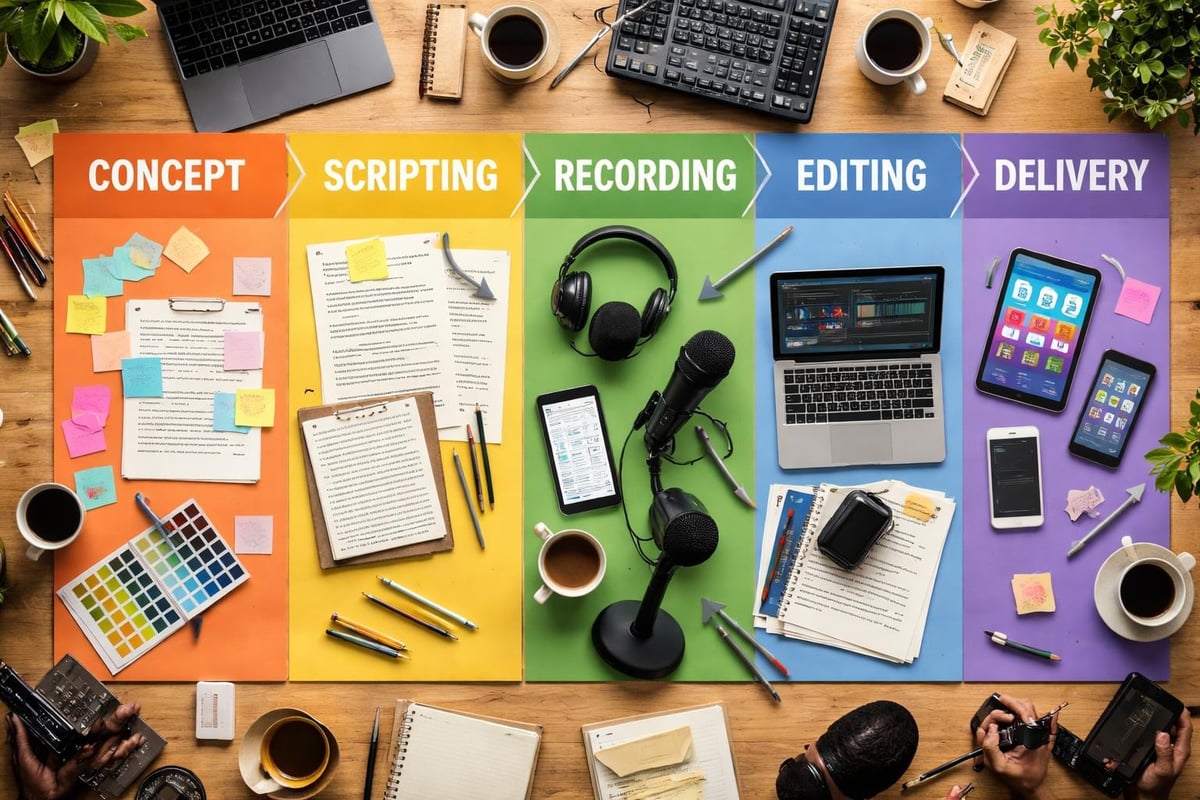
Creating compelling short podcasts requires different techniques than long-form podcasts. Every element must serve a purpose, and editing becomes critically important.
Pre-Production Planning
Successful short episodes begin with meticulous planning. Unlike conversational podcasts that allow natural meandering, brief formats demand structured outlines that specify exactly what each segment accomplishes.
Essential pre-production steps:
- Define the single core message or takeaway
- Create detailed scripts or bullet-point outlines
- Time each segment during planning
- Identify necessary sound elements or music cues
- Prepare guests with specific talking points
Many creators find that podcast planning tools help maintain focus during both preparation and recording phases.
Recording Techniques
Recording short podcasts often requires multiple takes to achieve the desired pace and energy. The condensed format leaves no room for tangents, requiring hosts to stay precisely on message.
Consider recording more content than needed, then editing down to the strongest material. This approach provides flexibility while ensuring tight pacing. Some producers record 20-minute sessions and distill them into 10-minute episodes, extracting only the most valuable moments.
Editing and Post-Production
Professional video podcast editing becomes even more crucial for short formats. Every pause, hesitation, or unnecessary word disrupts the flow and wastes precious seconds.
Critical editing considerations:
- Remove all filler words and verbal tics
- Tighten gaps between sentences
- Ensure consistent audio levels throughout
- Add dynamic music or sound effects strategically
- Create smooth transitions between segments
The post-production process for short podcasts often takes longer per minute than extended episodes because precision matters more.
Distribution and Promotion Strategies
Short podcasts require tailored distribution approaches that leverage their unique advantages. The format naturally aligns with social media consumption patterns and mobile-first listening behaviors.
Platform Optimization
Different platforms favor different content lengths. Understanding where your short episodes perform best helps maximize reach and engagement.
| Platform | Ideal Length | Format Preference | Audience Behavior |
|---|---|---|---|
| Spotify | 5-15 minutes | Audio or video | Active discovery |
| YouTube | 8-20 minutes | Video preferred | Visual engagement |
| Apple Podcasts | Any length | Audio focus | Subscription-based |
| Social Media | 3-10 minutes | Video clips | Passive scrolling |
For YouTube specifically, understanding best practices for podcast content helps optimize short episodes for the platform's algorithm and viewing patterns.
Creating Compelling Titles
Short podcasts benefit from specific, promise-driven titles that communicate value immediately. Unlike longer shows that can rely on guest names or broad topics, brief episodes need titles that specify exactly what listeners will learn or experience.
Effective title formulas:
- Time-bound promises: "5 Marketing Tips in 5 Minutes"
- Specific outcomes: "How to Write Better Headlines Today"
- Curiosity gaps: "The One Habit Successful Founders Share"
- Direct value: "Daily SEO Update: Algorithm Changes"
Consider how podcast titles function differently for short-form content, where specificity matters more than broad appeal.
Social Media Integration
Short podcasts naturally lend themselves to social sharing and repurposing. A 10-minute episode can become multiple podcast clips for different platforms without significant additional editing.
The emerging trend of micro-casts shows how even shorter snippets-30 seconds to 2 minutes-can drive audience engagement and discovery. These ultra-brief segments serve as teasers while delivering standalone value.
Monetization Opportunities
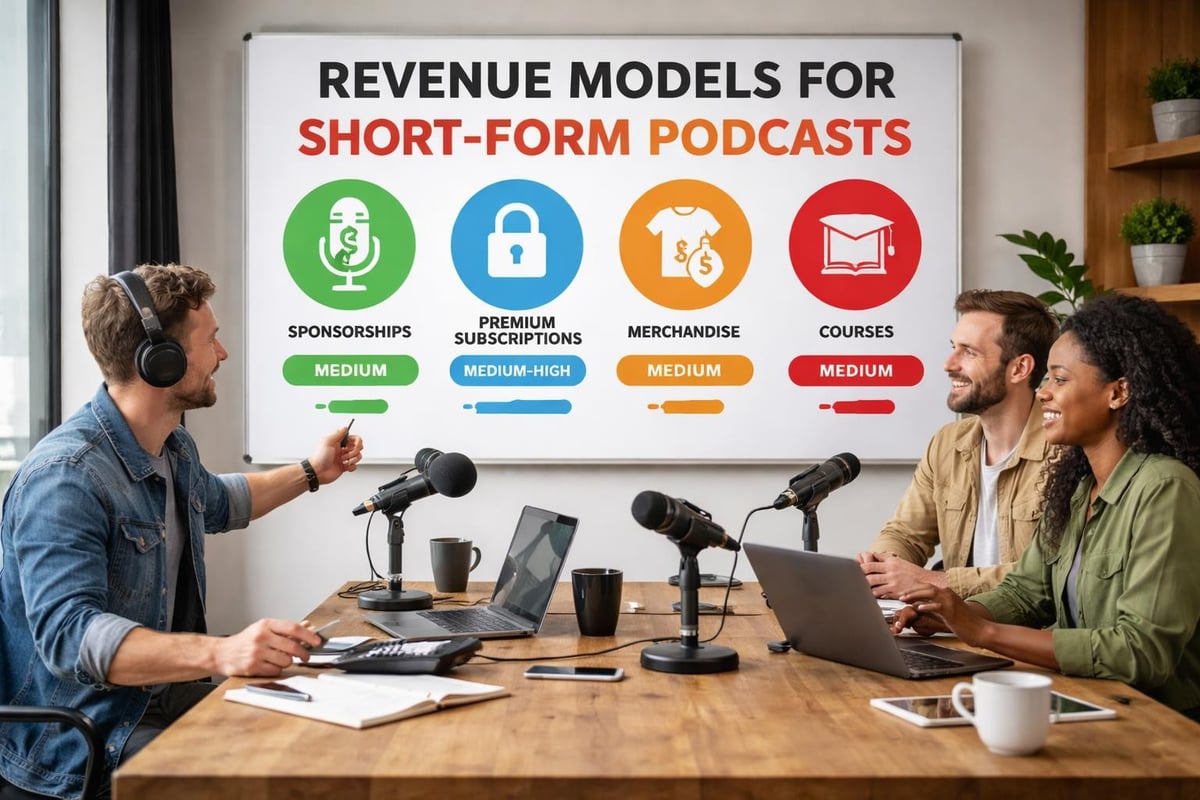
Short podcasts present unique monetization challenges and opportunities compared to traditional formats. The limited runtime affects traditional advertising models while opening alternative revenue streams.
Advertising and Sponsorships
Traditional pre-roll, mid-roll, and post-roll ads consume proportionally more time in short episodes. A 30-second ad represents 5% of a 10-minute show versus 1% of a 50-minute episode.
Alternative approaches:
- Host-read integrations: Brief, natural product mentions woven into content
- Sponsored episodes: Entire episodes created around partner themes
- Branded series: Multi-episode arcs funded by sponsors
- Dynamic ad insertion: Programmatic ads that respect episode length
Many successful short podcasts adopt minimal advertising strategies, focusing instead on building audiences for other monetization methods.
Premium Content and Subscriptions
Short podcasts work exceptionally well for subscription models. Listeners willingly pay for daily or frequent brief episodes that provide consistent value without time commitment barriers.
Successful subscription strategies:
- Daily exclusive episodes: Premium subscribers receive daily content
- Extended versions: Free episodes at 5 minutes, paid at 15 minutes
- Ad-free experiences: Remove ads for paying members
- Early access: Premium listeners get episodes before public release
The key is delivering enough frequency to justify ongoing subscription costs while maintaining quality standards.
Technical Considerations and Equipment
Producing professional short podcasts requires attention to technical quality that matches the polished, focused content. Poor audio immediately undermines the professionalism that brief formats communicate.
Essential Equipment
While podcast equipment needs vary by budget, short podcasts particularly benefit from quality microphones and controlled recording environments. Brief episodes mean listeners notice imperfections more readily.
Recommended equipment priorities:
- High-quality microphone: Captures clean, professional audio
- Pop filter: Eliminates plosives that sound amplified in tight edits
- Headphones: Monitors audio quality during recording
- Acoustic treatment: Reduces echo in condensed format
- Backup recording: Ensures you don't lose short sessions
For creators just starting, understanding basic podcast equipment helps make informed investment decisions.
Software and Editing Tools
Editing software for short podcasts should enable precise cuts, easy audio level management, and quick exports. Many producers prefer digital audio workstations (DAWs) that offer keyboard shortcuts for common editing tasks.
The editing process for a 10-minute episode might take 30-60 minutes for experienced editors, focusing on removing pauses, balancing levels, and ensuring smooth transitions. Professional podcast editing services understand these format-specific requirements.
Audience Growth Strategies
Building an audience for short podcasts requires consistent delivery and strategic promotion that emphasizes the format's convenience as a key benefit.
Consistency and Frequency
Short podcasts often succeed with daily or multiple-weekly release schedules. The brief time investment makes frequent publishing sustainable for creators while building listener habits.
Publishing frequency options:
| Schedule | Pros | Cons | Best For |
|---|---|---|---|
| Daily | Strong habits, high engagement | Demanding production | News, tips |
| 3x weekly | Manageable, consistent | Moderate commitment | Educational series |
| Weekly | Sustainable long-term | Lower habit formation | Story-based content |
| Bi-weekly | Reduced pressure | Risk of audience drift | Deep-dive topics |
Whatever schedule you choose, consistency matters more than frequency. Listeners develop routines around reliable content.
Cross-Promotion Tactics
Leverage the short format as a marketing advantage. Promote episodes by emphasizing time commitment: "Learn this in under 8 minutes" or "Your daily 5-minute marketing insight."
Consider creating podcast shorts specifically for social platforms, using the abbreviated format to drive traffic to full episodes. These micro-content pieces expand reach while respecting platform-specific audience behaviors.
Community Building
Short podcasts can build engaged communities despite brief episodes. Encourage listener interaction through focused questions, email responses to episodes, or social media discussions around specific topics.
The format's accessibility actually facilitates community growth. More listeners complete episodes, increasing the percentage who feel qualified to discuss content and contribute to conversations.
Future Trends in Short-Form Audio
The trajectory of short podcasts points toward increasing specialization and integration with emerging technologies and platforms.
AI and Automation
Artificial intelligence tools are beginning to assist with short podcast production, from transcription to editing suggestions. These technologies help creators maintain quality while publishing frequently.
Expect to see AI-powered tools that can identify the strongest moments in longer recordings, automatically creating short episodes from extended content. This capability will help creators serve multiple audience segments with varied time preferences.
Interactive Elements
Short podcasts are experimenting with interactive features that engage listeners within brief timeframes. Quick polls, clickable chapters, and integrated calls-to-action create two-way communication despite condensed formats.
Platforms increasingly support features that complement short episodes, from visual elements synchronized with audio to embedded links that listeners can access during or after episodes.
Niche Specialization
As the short podcast market matures, successful shows increasingly target specific niches rather than broad audiences. A 10-minute daily podcast about commercial real estate development or B2B SaaS marketing can build devoted followings among professionals seeking relevant insights.
This specialization allows creators to charge premium sponsorship rates despite smaller absolute audience sizes, as advertisers value concentrated access to specific demographics.
Measuring Success
Short podcasts require different success metrics than traditional formats. Completion rates, listening frequency, and time-to-consumption matter more than download numbers alone.
Key performance indicators:
- Episode completion rate: Percentage who finish episodes
- Listening frequency: How often individual listeners return
- Time to listen: How quickly downloads convert to plays
- Social sharing: Forwarding and recommendation rates
- Subscriber growth: New versus returning listener balance
These metrics reveal whether your short format truly serves audience needs or simply generates downloads that go unheard. Tools that track these deeper engagement signals help optimize content strategy.
Iterating Based on Data
Short podcasts allow rapid testing and iteration. Because production timelines are compressed and episodes don't require massive time investments from listeners, creators can experiment with different approaches and quickly identify what resonates.
Test various episode lengths, topics, formats, and release times. The shortened production cycle means you can implement changes weekly rather than waiting months to see results from strategic shifts.
Short podcasts represent a powerful format for reaching time-constrained audiences with focused, valuable content that respects their schedules while delivering meaningful insights. Whether you're launching a new show or adding a short-form series to your content mix, the format's accessibility and production efficiency make it an increasingly attractive option. Podcast Monkey specializes in helping creators produce professional short podcasts through comprehensive editing, optimization, and distribution services that ensure every second of your brief episodes delivers maximum impact.
About Podcast Monkey
Podcast Monkey is a video-first podcast production agency that handles strategy, recording support, editing, YouTube optimization, and repurposed clips for B2B brands. We specialize in turning raw podcast recordings into polished episodes and social content ready for YouTube, podcast platforms, and social media.
To get help with your show, book a free personalized podcast strategy consultation here: https://calendly.com/d/crd7-h33-vmq/personalized-podcast-strategy-consultation