
Spotify Uploading Podcast: Complete Guide for 2026

Spotify uploading podcast content has become a critical step for podcasters looking to reach the platform's 626 million active users worldwide. As one of the most popular podcast listening platforms in 2026, Spotify represents an essential distribution channel for both new and established podcast creators. Understanding the technical requirements, submission process, and optimization strategies ensures your podcast reaches your target audience effectively and maintains professional standards across all listening platforms.
Understanding Spotify's Podcast Platform Requirements
Before starting the Spotify uploading podcast process, you need to meet specific technical and content requirements. Spotify accepts podcasts through RSS feed submission rather than direct file uploads, which means you'll need a podcast hosting platform to store and distribute your episodes.
Essential technical specifications include:
- Audio format: MP3 files with a minimum bitrate of 96 kbps (recommended 128 kbps or higher)
- Cover art: JPEG or PNG format, minimum 1400 x 1400 pixels, maximum 3000 x 3000 pixels
- RSS feed: Valid XML feed with proper enclosures and metadata
- Episode titles: Maximum 255 characters
- Show descriptions: Maximum 4,000 characters
Audio Quality Standards
Your podcast audio quality directly impacts listener retention and platform recommendations. Spotify's algorithm favors content that keeps listeners engaged, making professional audio editing crucial for success. The platform supports stereo and mono audio files, though stereo typically provides a better listening experience for interview-style content and narrative podcasts.
Processing your audio through proper video podcast editing services ensures consistent volume levels, removes background noise, and maintains broadcast-quality standards across all episodes. These technical elements become even more important when you're distributing across multiple platforms simultaneously.
Preparing Your RSS Feed for Submission
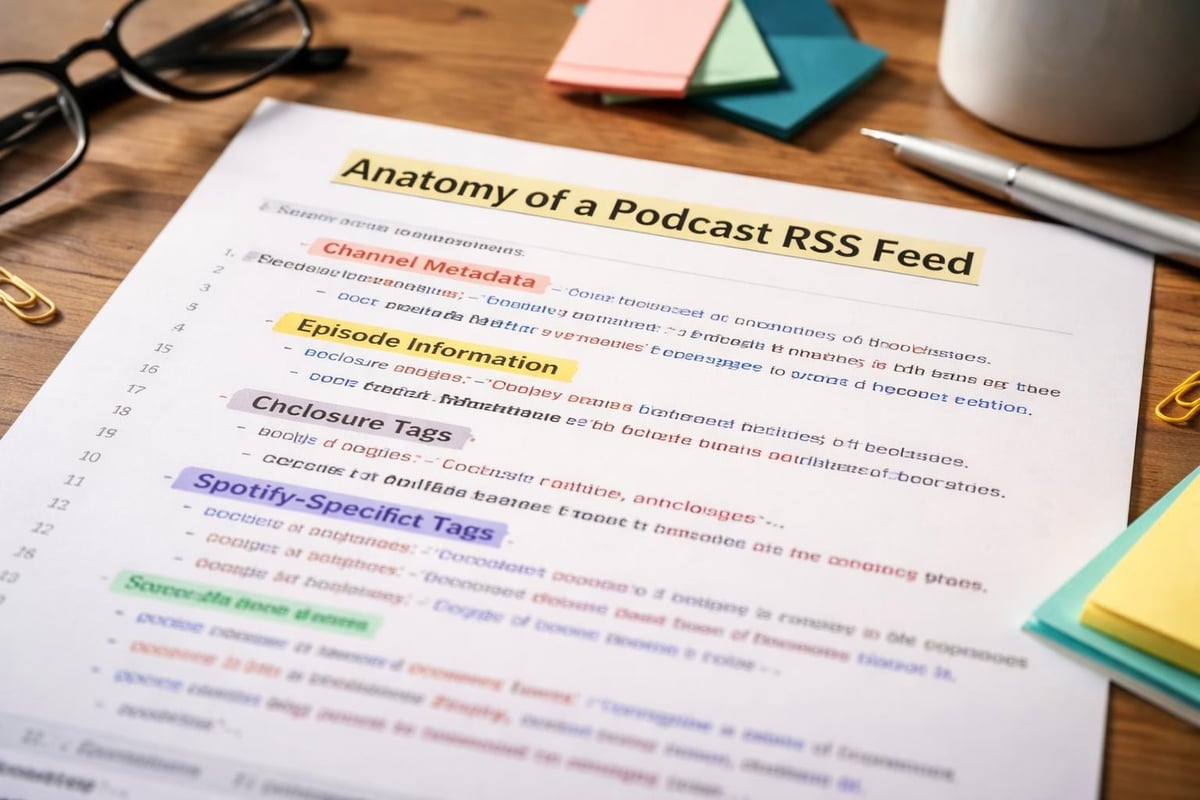
The RSS feed serves as the backbone of podcast distribution, containing all metadata, episode information, and file locations. When working on Spotify uploading podcast content, your RSS feed must validate correctly and include all required tags.
| RSS Element | Requirement | Purpose |
|---|---|---|
| Title | Required | Main podcast name displayed on Spotify |
| Description | Required | Show summary (4,000 character max) |
| Cover Art URL | Required | Link to podcast artwork image |
| Language | Required | Primary language code (e.g., en-us) |
| Category | Required | iTunes category classification |
| Author | Required | Creator or production company name |
| Explicit Tag | Required | Content rating (yes/no/clean) |
Validating Your Feed
Before submitting to Spotify, validate your RSS feed using online validation tools. A properly formatted feed prevents rejection and ensures smooth processing. The feed must be publicly accessible via HTTPS and return valid XML when accessed.
Common validation errors include:
- Missing or improperly sized cover art
- Invalid enclosure URLs or missing file extensions
- Malformed XML tags or unclosed elements
- Missing required iTunes namespace tags
- Incorrect MIME types for audio files
Podcast hosting services typically handle feed generation automatically, but verifying the output ensures compliance with Spotify's specifications.
Step-by-Step Spotify Uploading Podcast Process
The actual submission process requires a Spotify account and access to Spotify for Podcasters (formerly Anchor). This free platform serves as the gateway for managing your podcast presence on Spotify.
Creating Your Podcasters Account
Visit the Spotify for Podcasters website and create an account using your existing Spotify credentials or a new email address. This account becomes your central hub for analytics, episode management, and platform settings. Business accounts can connect multiple team members for collaborative management.
Account setup steps:
- Navigate to podcasters.spotify.com
- Sign in with Spotify credentials or create new account
- Verify email address through confirmation link
- Complete profile information and preferences
- Access the dashboard for RSS feed submission
Submitting Your RSS Feed URL
Once logged into Spotify for Podcasters, locate the "Add your podcast" or "Get Started" button. Enter your RSS feed URL exactly as provided by your hosting platform. Spotify validates the feed in real-time and displays any errors requiring correction.
The verification process typically completes within 24-48 hours, though some podcasts receive approval within hours. During this period, Spotify's systems check for content violations, technical compliance, and duplicate submissions. Following proper submission guidelines significantly reduces approval time.
Completing Metadata Optimization
After feed submission, enhance your podcast listing with additional metadata. While your RSS feed provides basic information, Spotify for Podcasters allows supplementary details that improve discoverability.
Optimization opportunities include:
- Detailed show notes with keywords relevant to your niche
- Categorization across multiple relevant categories
- Language selection for international audience targeting
- Episode-specific descriptions highlighting key discussion points
- Chapter markers for enhanced listener navigation
Managing Your Podcast After Approval

Successful Spotify uploading podcast efforts extend beyond initial submission. Active management of your podcast presence drives growth and engagement through platform-specific features and analytics.
Utilizing Spotify Analytics
Spotify for Podcasters provides comprehensive analytics tracking listener behavior, demographic information, and performance trends. These insights inform content strategy and help identify successful episode topics.
| Metric Category | Data Points | Strategic Value |
|---|---|---|
| Audience Demographics | Age, gender, location | Target content to listener profiles |
| Episode Performance | Starts, streams, completion rate | Identify resonant topics and formats |
| Follower Growth | New followers over time | Measure marketing effectiveness |
| Listener Retention | Average consumption percentage | Evaluate episode pacing and length |
| Platform Distribution | Spotify vs. other platforms | Understand platform preferences |
Regular analytics review helps optimize podcast strategy and content planning. Understanding which episodes perform best informs future topic selection and production decisions.
Publishing New Episodes
After completing Spotify uploading podcast setup, new episodes publish automatically when added to your RSS feed. Your hosting platform pushes updates to Spotify and other directories without requiring manual intervention. This automation ensures consistent publishing schedules and reduces administrative overhead.
Episode optimization best practices include:
- Publishing on consistent days and times
- Using descriptive episode titles with relevant keywords
- Writing detailed show notes with timestamps
- Including guest names and credentials when applicable
- Adding relevant tags and categories for each episode
Expanding to Video Podcasts on Spotify
Spotify's video podcast capabilities have expanded significantly, allowing creators to upload video content alongside traditional audio episodes. This feature provides additional engagement opportunities and caters to audiences who prefer visual content.
Video Format Requirements
Video podcasts on Spotify require specific technical specifications beyond standard audio requirements. Understanding these parameters ensures successful video integration with your existing podcast feed.
Video technical specifications:
- Format: MP4 container with H.264 video codec
- Resolution: Minimum 640 x 360 pixels, recommended 1920 x 1080 pixels
- Aspect ratio: 16:9 widescreen format
- File size: Maximum 1 GB per episode
- Frame rate: 23.976, 24, 25, 29.97, or 30 fps
- Audio: AAC codec, minimum 96 kbps
Professional video podcast production ensures visual quality matches audio standards, maintaining brand consistency across distribution channels. Video elements should complement rather than distract from content delivery, with attention to framing, lighting, and visual composition.
Troubleshooting Common Submission Issues
Even experienced podcasters encounter challenges during the Spotify uploading podcast process. Understanding common issues and solutions minimizes downtime and accelerates approval.
Feed Validation Errors
Invalid RSS feeds represent the most frequent submission obstacle. Spotify's validation system checks for XML compliance, required tags, and proper formatting. Address these issues through your hosting platform or by manually editing the feed file.
- Missing artwork: Upload images meeting exact size specifications
- Invalid audio URLs: Verify file accessibility and HTTPS protocol
- Improper encoding: Ensure UTF-8 character encoding throughout feed
- Missing iTunes tags: Include all required iTunes namespace elements
- Duplicate content: Remove duplicate episode entries or show information
Comprehensive submission guides from hosting platforms often address platform-specific validation requirements and workarounds for common technical challenges.
Delayed Approval Resolution
If approval exceeds 72 hours, verify your submission status through Spotify for Podcasters. Check the email associated with your account for communication from Spotify's review team regarding required changes or additional information.
Common delay causes:
- Content policy violations requiring review
- Duplicate podcast submissions from multiple feeds
- Incomplete or missing metadata fields
- Technical issues with RSS feed accessibility
- High submission volume during peak periods
Optimizing Discoverability After Launch
Completing Spotify uploading podcast submission marks the beginning of audience building. Strategic optimization increases visibility within Spotify's recommendation algorithms and search results.
Keyword Strategy Implementation
Spotify's search algorithm indexes podcast titles, descriptions, and episode information. Strategic keyword placement improves discoverability without compromising content quality or readability. Research trending topics within your niche and incorporate relevant terms naturally throughout your metadata.
Effective keyword placement locations include:
- Podcast title (primary keywords only)
- Show description (supporting keywords and variations)
- Episode titles (specific topic keywords)
- Episode descriptions (long-tail keyword phrases)
- Author and publisher fields (brand name and expertise)
Encouraging Follower Growth
Spotify's algorithm prioritizes podcasts with strong follower counts and engagement metrics. Actively encourage listeners to follow your show through direct calls-to-action during episodes and in show notes. Following indicates sustained interest and improves recommendation probability.
Follower growth tactics:
- Verbal reminders during episode introductions and outros
- Show notes instructions with specific platform directions
- Social media campaigns highlighting Spotify presence
- Cross-promotion with complementary podcasts in your niche
- Email marketing to existing audience promoting Spotify availability
Integrating Multi-Platform Distribution Strategy
While Spotify uploading podcast content is essential, successful podcasters distribute across multiple platforms simultaneously. Your RSS feed enables automatic distribution to Apple Podcasts, Google Podcasts, and numerous other directories from a single source.
Platform-Specific Optimization
Each podcast platform offers unique features and audience demographics. Optimizing for Spotify doesn't preclude success on other platforms, but understanding platform differences informs strategic decisions about content format and promotional efforts.
Comparing major podcast platforms:
| Platform | Unique Features | Optimization Focus |
|---|---|---|
| Spotify | Playlists, video support, creator dashboard | Follow counts, playlist inclusion |
| Apple Podcasts | Reviews, ratings, charts | Ratings, reviews, category rankings |
| YouTube | Video-first, search visibility | SEO, thumbnails, engagement metrics |
| Google Podcasts | Integration with Google ecosystem | Show notes, transcription |
YouTube podcast optimization requires different strategies than audio-first platforms, particularly regarding visual elements and searchability. Balancing platform-specific requirements with consistent brand identity across channels maximizes total audience reach.
Managing Cross-Platform Analytics
Track performance across all distribution channels to understand audience preferences and platform strengths. Some audiences prefer Spotify's interface, while others favor YouTube's video experience or Apple Podcasts' ecosystem integration. Detailed submission processes for each platform ensure maximum distribution coverage.
Consolidated analytics from multiple sources reveal comprehensive performance patterns beyond single-platform metrics. This broader perspective informs content decisions, promotional strategies, and resource allocation across different marketing channels.
Maintaining Technical Standards Long-Term
Consistent technical quality prevents listener drop-off and platform compliance issues. Establish production standards covering audio processing, file naming conventions, and metadata consistency across all episodes. These standards become especially important as your catalog grows and team members change.
Quality Control Checklist
Implement systematic quality checks before publishing new episodes. This process catches technical errors that might affect Spotify uploading podcast automation or listener experience. Automated checks through hosting platforms supplement manual review for comprehensive quality assurance.
Pre-publication verification steps:
- Audio level consistency across episodes (-16 LUFS recommended)
- Proper ID3 tags including episode number and season
- Show notes formatting and link functionality
- Chapter markers accuracy and timestamps
- Cover art display across different screen sizes
- File naming conventions for archival organization
Professional post-production services handle technical quality control systematically, ensuring every episode meets broadcast standards before distribution. This consistency builds listener trust and supports long-term audience retention.
Leveraging Spotify-Exclusive Features
Spotify offers unique features unavailable on other podcast platforms, creating opportunities for enhanced listener engagement and content strategy differentiation. Understanding and implementing these features adds value beyond basic podcast distribution.
Creating Spotify Playlists
While primarily music-focused, Spotify playlists can include podcast episodes alongside musical selections. Curated playlists combining your episodes with relevant music creates unique listening experiences that increase discoverability through Spotify's recommendation engine.
Playlist strategy considerations:
- Thematic alignment between music and episode content
- Playlist title optimization for search visibility
- Regular updates maintaining freshness and relevance
- Cross-promotion through social media channels
- Collaborative playlists encouraging audience participation
Utilizing Spotify Codes
Spotify generates unique QR-style codes for podcasts enabling quick access through mobile scanning. These codes work effectively in physical marketing materials, social media graphics, and promotional partnerships. Scanning immediately opens your podcast within the Spotify app, reducing friction in the discovery process.
Implementing Spotify codes in marketing:
- Conference materials and business cards
- Social media story highlights and posts
- Email signature graphics
- Print advertisements and flyers
- Merchandise and branded materials
Monetization Opportunities Through Spotify
Spotify's advertising platform provides monetization options for podcast creators meeting specific eligibility requirements. Understanding these opportunities helps inform content strategy and business model development for professional podcasters.
Spotify Audience Network
The Spotify Audience Network automatically inserts targeted advertisements into podcast episodes, sharing revenue with creators based on impressions. Eligibility requires minimum listener counts and content compliance with advertising standards. This passive monetization supplements other revenue streams without requiring direct advertiser relationships.
Eligibility requirements typically include:
- Minimum monthly listeners threshold (varies by region)
- Content compliance with advertiser-friendly guidelines
- Spotify for Podcasters account in good standing
- Geographic availability in supported markets
- Consistent publishing schedule demonstrating active production
Subscription Programming
Spotify supports subscription-based podcast content through premium tiers offering exclusive episodes, ad-free listening, or early access. This model works effectively for established podcasts with engaged audiences willing to pay for additional value. Strategic planning around subscription offerings balances free and premium content appropriately.
Mastering the Spotify uploading podcast process opens your content to millions of potential listeners on one of the world's leading audio platforms. By following technical requirements, optimizing metadata, and leveraging platform-specific features, you position your podcast for discoverability and growth. If you're ready to streamline your production workflow and ensure professional-quality episodes across all platforms, Podcast Monkey handles the technical complexity so you can focus on creating compelling content that resonates with your audience.
About Podcast Monkey
Podcast Monkey is a video-first podcast production agency that handles strategy, recording support, editing, YouTube optimization, and repurposed clips for B2B brands. We specialize in turning raw podcast recordings into polished episodes and social content ready for YouTube, podcast platforms, and social media.
To get help with your show, book a free personalized podcast strategy consultation here: https://calendly.com/d/crd7-h33-vmq/personalized-podcast-strategy-consultation