Podcast Starter Kit Guide: Launch Your Show in 2026

Dreaming of launching your own show in 2026? The possibilities are more exciting than ever, but navigating the latest technology and finding the right podcast starter kit can feel overwhelming.
This guide is here to simplify the process. Whether you are a complete beginner or looking to upgrade your existing setup, you will find a clear, step-by-step roadmap to building a professional-sounding podcast from scratch.
We will cover the essential gear you need, how to choose the best kit for your goals, practical setup instructions, recording tips, and expert strategies to help your show stand out in the busy world of 2026 podcasting.
With the right podcast starter kit and the right knowledge, you can confidently turn your vision into a polished, successful show.
About Podcast Monkey Podcast Monkey is a video-first podcast production agency that handles strategy, recording support, editing, YouTube optimization, and repurposed clips for B2B brands. We specialize in turning raw podcast recordings into polished episodes and social content ready for YouTube, podcast platforms, and social media.
To get help with your show, book a free personalized podcast strategy consultation here: https://calendly.com/d/crd7-h33-vmq/personalized-podcast-strategy-consultation
Understanding the Podcast Starter Kit: Core Components and 2026 Trends
Launching a podcast in 2026 begins with understanding what makes a podcast starter kit truly effective. Whether you are a beginner or looking to upgrade, the right combination of gear and awareness of current trends sets the stage for a professional show.
The Four Essentials: Microphone, Headphones, Audio Interface, and Recording Software
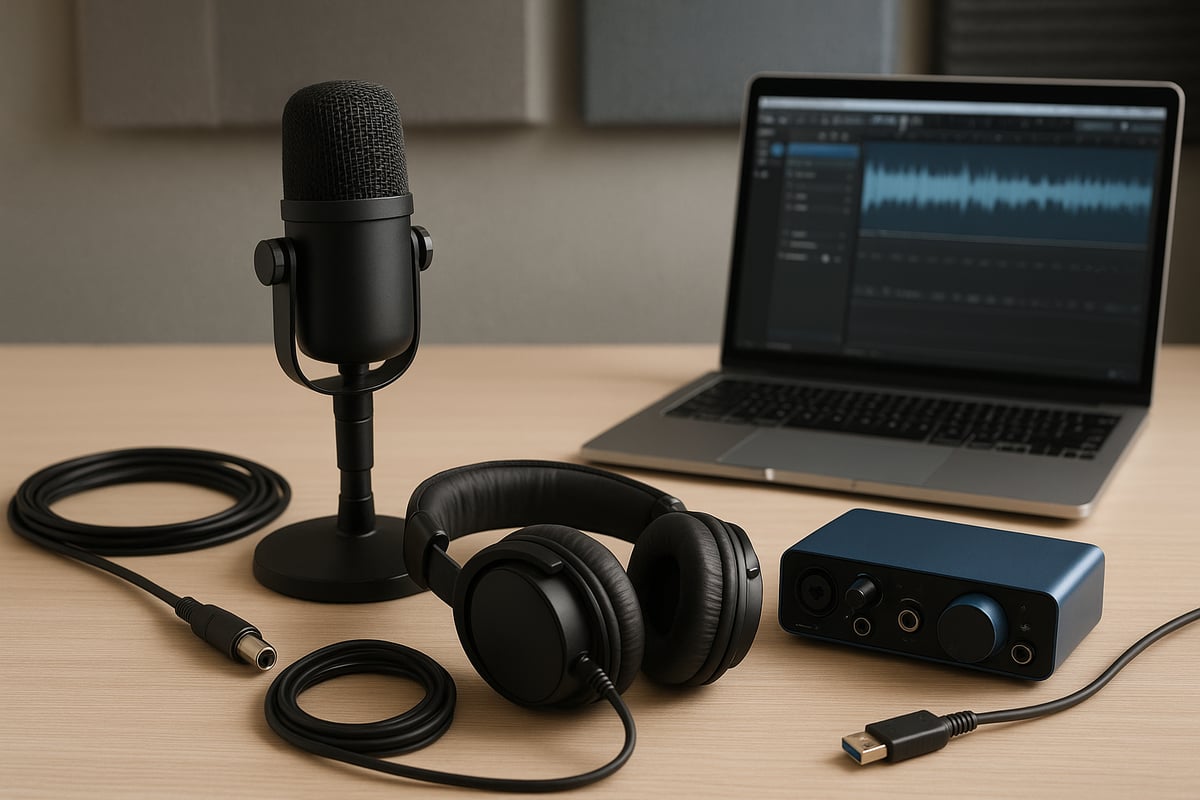
Every podcast starter kit relies on four core components: a microphone, headphones, an audio interface, and recording software. Each plays a unique role in shaping your sound.
Microphone: The microphone is the heart of your audio quality. Dynamic microphones, like the Shure SM58, handle noisy spaces and are durable, while condenser mics, such as the Audio-Technica AT2020, capture more detail but need a quieter room. USB mics offer plug-and-play simplicity, ideal for beginners, while XLR mics provide pro-level sound and flexibility.
Headphones: Closed-back headphones are critical for accurate monitoring and editing. They block outside noise and prevent sound from leaking into your mic. This ensures you hear every detail, from background hums to vocal pops.
Audio Interface: An audio interface converts your mic’s signal for your computer. You need one if you use XLR microphones or want to connect multiple mics. Some interfaces, like the Zoom PodTrak P4, bundle recording, mixing, and even remote call options for more flexibility.
Recording Software: Podcasting software has evolved rapidly. Basic programs like Audacity remain popular, but 2026 sees AI-powered tools automating editing, noise reduction, and publishing. Choosing the right software can save hours in post-production.
For a deeper dive into essential gear and their roles in a podcast starter kit, see the Podcast equipment essentials guide.
Modern kits, such as the Zoom PodTrak P4, combine several functions, making it easier for creators to get started. Remember, over half of listeners abandon podcasts due to poor audio quality, so investing wisely in your podcast starter kit matters.
Emerging Trends in 2026 Podcasting Gear
The podcast starter kit of 2026 reflects a wave of innovation. AI-assisted noise reduction is now standard, allowing real-time audio cleanup and clarity even in less-than-ideal environments.
Video podcasting has surged in popularity. Many starter kits now include built-in cameras or support for multi-cam setups, helping creators reach audiences on YouTube and social platforms.
Wireless and portable gear options are on the rise. Compact, battery-powered interfaces and wireless microphones make it easy to record anywhere, perfect for mobile creators.
Sustainability is also shaping choices. Eco-friendly materials and energy-efficient devices are becoming more common, giving podcasters greener options.
A standout example is the NearStream all-in-one kit, which includes multi-cam video and AI-driven enhancements as standard. These trends ensure that a modern podcast starter kit is not just about audio — it is about flexibility, quality, and future-readiness.
Choosing the Right Kit for Your Format and Budget
Selecting a podcast starter kit starts with your show’s format. Solo podcasters can often begin with a single USB mic bundle. For co-hosted or interview shows, look for kits with multiple mic inputs and robust audio interfaces.
Budget is another key factor. Entry-level smartphone kits can cost under $100 and offer surprising quality for basic setups. USB mic bundles, often priced between $100 and $200, provide a good balance of quality and simplicity. All-in-one kits with multi-mic support and video features can reach $500 or more but deliver professional results.
| Format | Recommended Kit Type | Price Range |
|---|---|---|
| Solo | USB Mic Bundle | $100–$200 |
| Co-hosted | Multi-mic All-in-One Kit | $300–$600 |
| Interview | Smartphone or XLR Bundle | $80–$500 |
Pre-packaged kits offer convenience and compatibility, while custom builds allow for tailored upgrades. Evaluate your technical comfort and future plans before choosing. With the right podcast starter kit, you can match your goals, space, and budget with ease.
About Podcast Monkey
Podcast Monkey is a video-first podcast production agency that handles strategy, recording support, editing, YouTube optimization, and repurposed clips for B2B brands. We specialize in turning raw podcast recordings into polished episodes and social content ready for YouTube, podcast platforms, and social media.
To get help with your show, book a free personalized podcast strategy consultation here: https://calendly.com/d/crd7-h33-vmq/personalized-podcast-strategy-consultation
Step 1: Define Your Podcast Vision and Technical Needs
Launching a podcast begins with a clear vision. Before you choose a podcast starter kit, you must understand your show's direction, your audience, and what technical path suits your goals. This step sets the foundation for selecting gear and ensures your investment is future-proof.
Clarifying Your Show’s Goals and Audience
Start by defining who your podcast is for and what unique value you bring. Are you targeting entrepreneurs, true crime fans, or hobbyists? Pinpointing your audience helps you choose the right podcast starter kit and format.
Decide on your show style: solo commentary, interviews, roundtable discussions, or narrative storytelling. For example, a business podcast may need remote call recording, while a narrative show benefits from sound design tools.
If you are still weighing your options, this guide on Should you start a podcast in 2026 offers insights into the latest opportunities and challenges.
Space and Recording Environment Considerations
Next, assess where you will record. Is it a quiet home office, a shared living room, or will you be mobile? Your space impacts which podcast starter kit fits best.
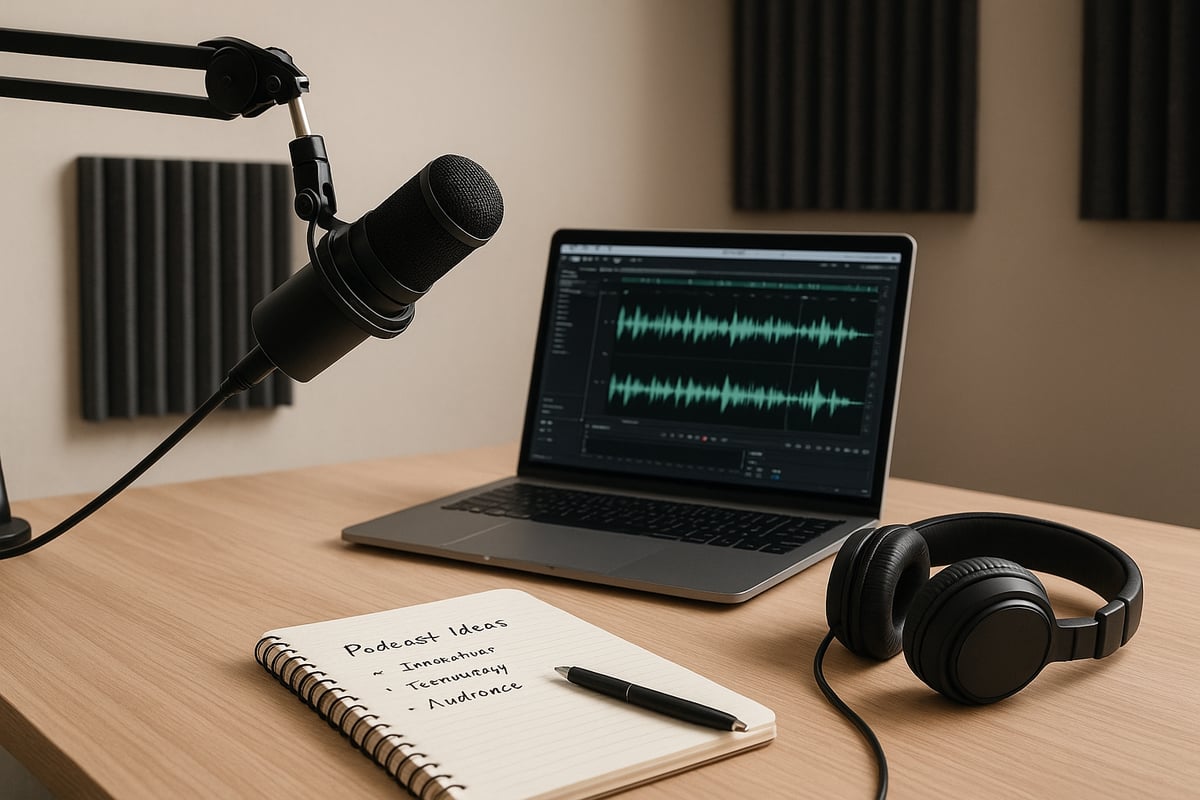
Portable kits suit creators on the go, while home studios allow for more robust setups. Pay attention to acoustics: hard surfaces create echoes, while soft materials like carpets, curtains, or foam panels absorb sound.
Simple sound treatment, even with DIY solutions, can elevate your audio quality and make editing easier.
Assessing Your Technical Comfort Level
Be honest about your tech skills. Do you want a plug-and-play podcast starter kit, or are you willing to learn advanced tools? USB microphones are easy for beginners, while XLR setups offer more control for experienced users.
If you prefer simplicity, stick with kits that include bundled software and clear instructions. Those seeking professional sound may invest in interfaces and advanced editing platforms.
Knowing your comfort level ensures you will not feel overwhelmed and helps you stay consistent with your show.
Budget Planning for 2026
Outline your budget before shopping for a podcast starter kit. Entry-level smartphone kits start under $100, while mid-range USB mic bundles offer more features for around $150–$300. High-end multi-mic packages can exceed $500.
Remember to factor in hidden costs, such as cables, stands, pop filters, and acoustic treatment. For example, the Samson Q2U bundle provides excellent value by including key accessories.
A well-planned budget prevents surprises and ensures you get the best sound for your investment.
Future-Proofing Your Setup
Think ahead when selecting your podcast starter kit. If you plan to grow your show, choose gear that is scalable. Modular kits allow you to add microphones or upgrade interfaces as your needs evolve.
With video podcasting on the rise, consider kits that support video even if you start with audio-only. This flexibility makes it easier to expand to platforms like YouTube in the future.
Investing in adaptable gear now will save you time and money as your podcast grows.
About Podcast Monkey Podcast Monkey is a video-first podcast production agency that handles strategy, recording support, editing, YouTube optimization, and repurposed clips for B2B brands. We specialize in turning raw podcast recordings into polished episodes and social content ready for YouTube, podcast platforms, and social media.
To get help with your show, book a free personalized podcast strategy consultation here: https://calendly.com/d/crd7-h33-vmq/personalized-podcast-strategy-consultation
Step 2: Selecting the Best Podcast Starter Kit for Your Show
Choosing the ideal podcast starter kit is the foundation of a great show. With so many options available in 2026, understanding what each kit offers—and how it fits your needs—will help you make a confident investment.
Smartphone Podcast Starter Kits: The Ultimate Entry Point
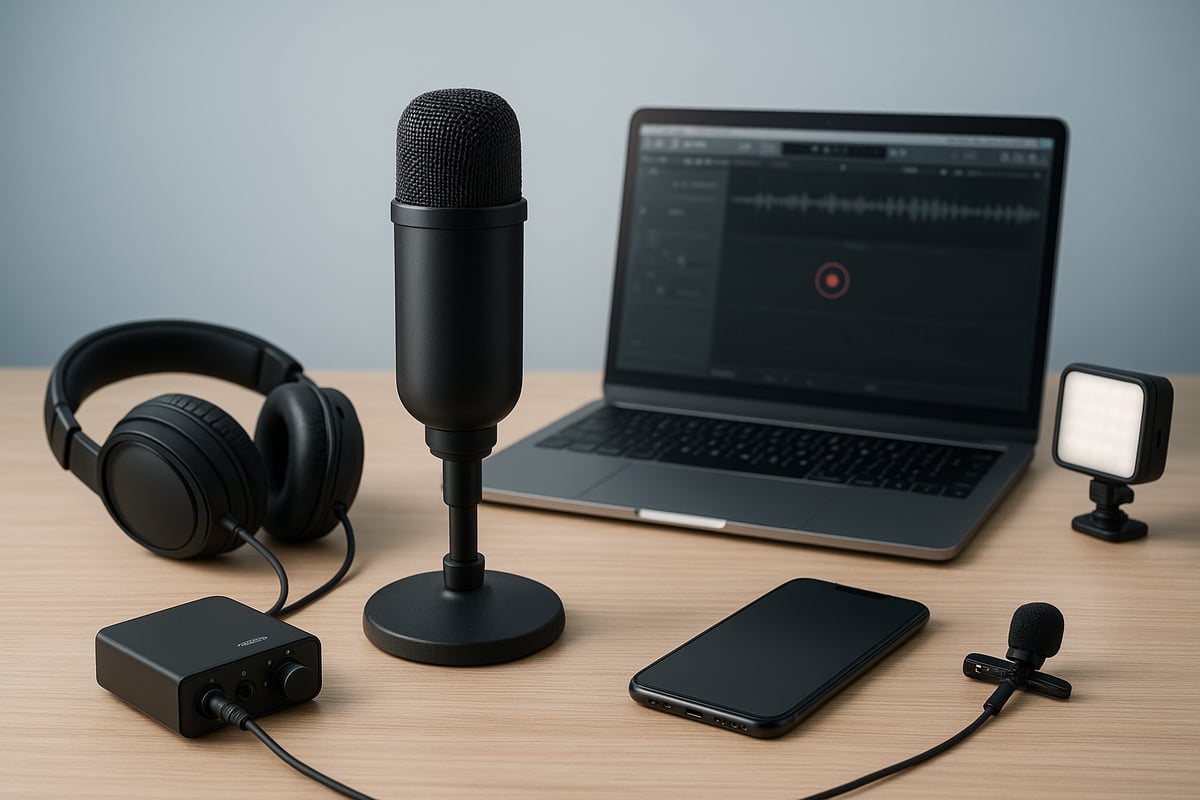
A smartphone podcast starter kit is perfect for beginners who want to jump in with minimal fuss. These kits are ultra-portable and budget-friendly, often costing less than $100. They typically include a clip-on or wireless lavalier microphone, compact headphones, and sometimes a mini tripod.
The biggest advantage is simplicity. You can record interviews or solo shows anywhere, using your phone and an external mic for improved audio. However, sound quality is limited compared to more advanced setups, and upgrade paths can be restricted.
Recommended gear includes the Rode Wireless Micro, BOYA Mini, and Shure MV5. For creators prioritizing convenience, a smartphone podcast starter kit is a solid first step toward building your podcasting presence.
USB Microphone Kits: Plug-and-Play for Beginners and Pros
USB microphone kits have become a top choice for podcasters seeking a balance between quality and simplicity. These kits plug directly into your computer, offering better sound than built-in mics and easy setup for both solo and remote recording.
Common bundles feature a USB mic, stand, pop filter, and closed-back headphones. Top picks include the Samson Q2U, Audio-Technica ATR2100, Blue Yeti, and Shure MV7. You can find complete podcast starter kit bundles for under $150.
While USB kits are less expandable than XLR-based systems, they deliver professional audio for most formats. With the Blue Yeti holding 16.6 percent of the market, it is clear these kits are trusted by many podcasters.
All-In-One and Multi-Mic Kits: For Co-Hosts and Interviews
If you plan to host interviews or roundtable discussions, an all-in-one or multi-mic podcast starter kit is your best bet. These kits include audio interfaces or recorders with multiple mic inputs, allowing you to capture several voices at once.
Popular options like the Zoom PodTrak P4, MOVO PodPro-T, and PodPro Solo/Duo/Quad offer onboard recording, advanced controls, and built-in headphone monitoring. Setting up a roundtable with four XLR mics is straightforward with these tools.
Although these kits require a higher investment and a bit of a learning curve, they are increasingly popular for business and branded podcasts. A multi-mic podcast starter kit ensures every guest sounds crisp and professional.
Video Podcasting Starter Kits: 2026 Innovations
The rise of video podcasts in 2026 has made video-ready podcast starter kit bundles essential. These kits combine 4K webcams or streaming cameras, lighting, and audio gear to help you launch on platforms like YouTube and TikTok.
Essential gear includes NearStream VM20/VM33 cameras and modular lighting kits that support 1 to 8+ hosts. Plug-and-play video podcasting is now easier than ever, with multi-cam setups available as standard.
For more details on the latest gear trends, including AI tools and video integration, see this comprehensive overview of Podcast equipment trends 2025. Investing in a video-focused podcast starter kit helps expand your reach and future-proofs your show.
Custom vs. Pre-Packaged Kits: Making the Right Choice
Choosing between a pre-packaged podcast starter kit and a custom build depends on your experience and goals. Pre-packaged kits offer convenience, warranty, and matched components, making them ideal for beginners.
Custom kits allow more flexibility and upgradability but require research and technical confidence. Consider your long-term needs, support options, and potential accessories when deciding which approach best fits your podcast vision.
Accessories That Make a Difference
Accessories can elevate any podcast starter kit. Must-have add-ons include adjustable mic stands, pop filters, shock mounts, and quality cables. Closed-back headphones are essential for accurate monitoring and editing.
Affordable sound treatment, like foam panels or carpets, improves room acoustics and recording quality. Investing in these extras ensures your podcast starter kit delivers the best possible results from day one.
Podcast Monkey: End-to-End Podcast Production Services
If you want to focus on content creation rather than technical details, Podcast Monkey offers full-service podcast production. Their team handles editing, YouTube optimization, social media content, and episode management.
With Podcast Monkey, you can transform your podcast starter kit recordings into polished, multi-platform episodes. This service is perfect for podcasters aiming for professional results and wide distribution without the learning curve.
About Podcast Monkey Podcast Monkey is a video-first podcast production agency that handles strategy, recording support, editing, YouTube optimization, and repurposed clips for B2B brands. We specialize in turning raw podcast recordings into polished episodes and social content ready for YouTube, podcast platforms, and social media.
To get help with your show, book a free personalized podcast strategy consultation here: https://calendly.com/d/crd7-h33-vmq/personalized-podcast-strategy-consultation
Step 3: Setting Up and Testing Your Podcast Starter Kit
Setting up your podcast starter kit is the foundation for producing professional audio and growing your audience. Whether you are unboxing your first kit or upgrading to a more advanced setup, careful assembly and testing are essential. This step-by-step guide ensures your equipment works seamlessly, your environment sounds great, and your first recording is a success.
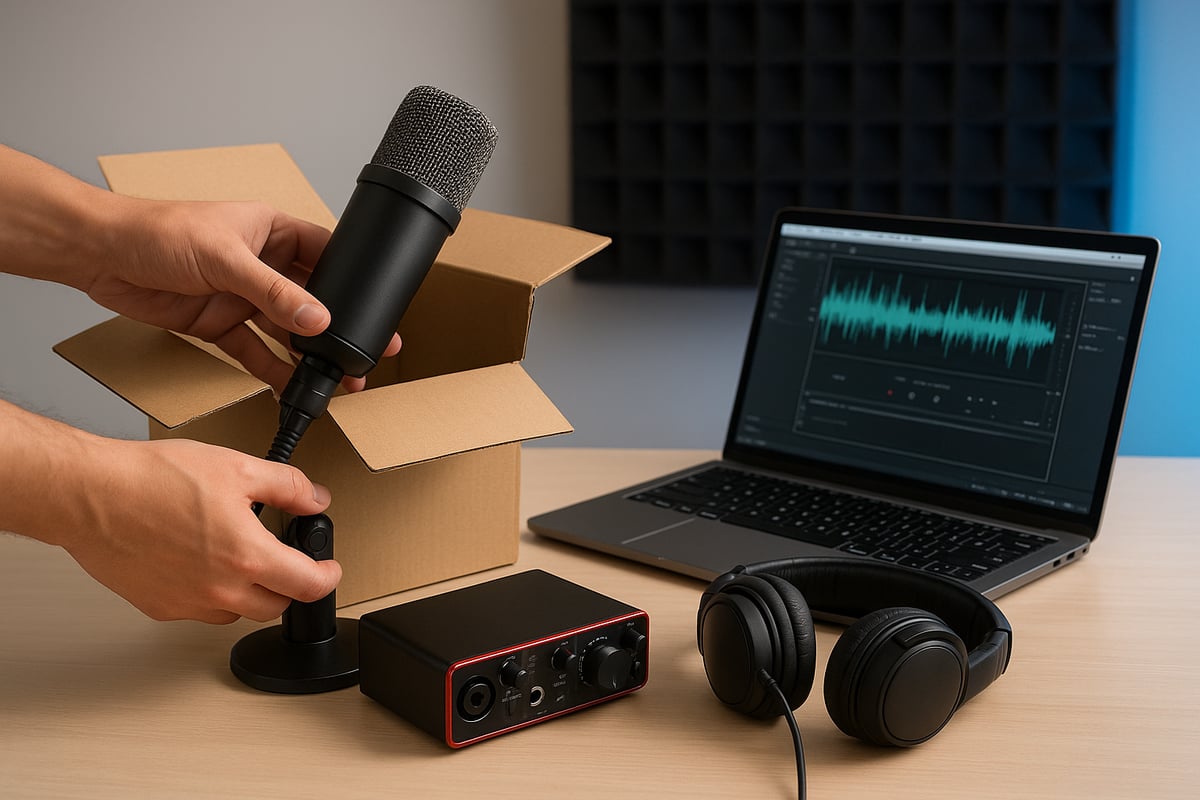
Unboxing and Assembling Your Gear
Begin by carefully unboxing each component in your podcast starter kit. Lay out your microphone, headphones, audio interface, and cables. Identify each piece and check them against the kit’s inventory list to ensure nothing is missing.
Follow these steps for a smooth assembly:
- Connect the microphone to the audio interface or directly to your computer if using a USB mic.
- Attach the headphones to the interface or computer for real-time monitoring.
- Secure your mic on a stand or boom arm to reduce vibrations.
- Organize cables to prevent tangling and accidental disconnections.
Take a moment to review any included manuals for unique setup tips. A well-organized podcast starter kit setup reduces potential issues later and helps you focus on content creation.
Installing and Configuring Recording Software
With your hardware ready, the next step is installing recording software compatible with your podcast starter kit. Popular choices in 2026 include Audacity, GarageBand, Adobe Audition, and AI-powered platforms like Alitu.
Set up your software as follows:
- Download and install your chosen application.
- Connect your podcast starter kit devices and verify they are recognized.
- Select your microphone and interface as the primary input.
- Adjust sample rates and audio preferences for optimal quality.
Familiarize yourself with the layout and key features. Many modern tools offer guided setup wizards, making it easier than ever to start recording with your podcast starter kit.
Sound Check: Testing and Troubleshooting
Before your first episode, it is crucial to run a thorough sound check. Plug in your headphones and speak into the microphone. Monitor the input levels within your recording software.
Common troubleshooting steps include:
- If audio is too quiet, increase the input gain slightly.
- If you hear distortion, lower the gain or move farther from the mic.
- Address echo by adjusting your mic’s position or adding soft materials nearby.
Here is a quick troubleshooting table for your reference:
| Problem | Solution |
|---|---|
| No sound | Check cable connections |
| Static noise | Replace cables, check interface |
| Echo | Add room treatment, reposition |
Test all podcast starter kit components to ensure everything functions as expected.
Optimizing Your Recording Environment
Your recording space greatly impacts the results from your podcast starter kit. Choose a quiet room with minimal background noise. Soft furnishings like carpets, curtains, and foam panels help absorb unwanted sound.
Basic sound treatment tips:
- Place foam panels on walls to reduce reflections.
- Use thick curtains or blankets over windows.
- Position your mic away from noisy electronics.
For more detailed advice on assembling and optimizing your space, see Setting up a podcast studio.
A well-treated room allows your podcast starter kit to capture clear, professional audio.
Recording Your First Episode: Best Practices
With your podcast starter kit assembled and tested, it is time to record your first episode. Prepare a script or outline to stay on track and minimize editing.
Best practices for a smooth recording:
- Test all gear before hitting record.
- Record a short sample and listen back for any issues.
- Maintain consistent mic distance for even sound.
If you are recording interviews remotely, platforms like SquadCast or Riverside.fm integrate seamlessly with most podcast starter kit setups. Begin with a short introduction and remember to relax and enjoy the process.
Backup Strategies and File Management
Protect your hard work by implementing reliable backup strategies. Always save raw audio files immediately after recording. Use clear, consistent file naming conventions for easy organization.
Recommended practices:
- Store files in at least two locations, such as your computer and a cloud service.
- Create folders for each episode to keep assets organized.
- Regularly back up your podcast starter kit project files to avoid data loss.
Developing good file management habits early will save time and prevent stress as your show grows.
About Podcast Monkey Podcast Monkey is a video-first podcast production agency that handles strategy, recording support, editing, YouTube optimization, and repurposed clips for B2B brands. We specialize in turning raw podcast recordings into polished episodes and social content ready for YouTube, podcast platforms, and social media.
To get help with your show, book a free personalized podcast strategy consultation here: https://calendly.com/d/crd7-h33-vmq/personalized-podcast-strategy-consultation
Step 4: From Recording to Publishing—Editing, Branding, and Launch
Launching your show starts with your podcast starter kit, but transforming raw audio into a polished production is where your brand truly comes to life. Each step from editing to publishing shapes your listener’s experience and determines how your podcast stands out in a crowded 2026 landscape. Let’s break down the essentials, from post-production to launch and growth.
Editing Your Podcast for Professional Quality
Great editing separates amateur podcasts from professional productions. Whether your podcast starter kit includes a USB mic or a multi-mic interface, your editing workflow should focus on clarity and consistency.
Start by importing your raw files into software like Audacity, Alitu, Descript, or Adobe Audition. Trim unwanted sections, reduce noise, and balance volume levels. AI-powered tools in 2026 offer automated noise reduction and smart editing features that save time without sacrificing quality.
Consider this workflow:
- Remove mistakes, silences, and filler words
- Apply noise reduction and EQ for clarity
- Level audio for consistent loudness
- Insert music and transitions
Free tools like Audacity are great for beginners, while Alitu and Descript offer advanced automation for busy creators. No matter your podcast starter kit, prioritize a clean, listener-friendly result.
Adding Music, Intros, and Outros
Your intro and outro set the tone for your show and make it memorable. With your podcast starter kit, you can easily add branded music and voiceovers during editing.
Source royalty-free music from platforms like Shutterstock, Epidemic, or Envato Elements. Use editing software to blend music with your spoken content, keeping intros under 30 seconds for maximum impact.
Tips for standout branding:
- Choose music that matches your show's energy
- Record a custom intro script with your kit's mic
- Layer in sound effects for narrative podcasts
A polished intro helps your podcast starter kit deliver a professional first impression.
Creating Standout Podcast Cover Art
Eye-catching cover art is crucial for attracting listeners on Spotify, Apple Podcasts, and YouTube. Most platforms require artwork sized at least 1400x1400 pixels, though 3000x3000 pixels is recommended for future-proofing.
Design your art using tools like Canva or Adobe Express, both of which offer templates tailored to podcasting. For a unique look, consider hiring a graphic designer.
Cover art checklist:
- Bold, legible title and logo
- Simple, uncluttered design
- High-contrast colors for visibility
Your cover art is the visual extension of your podcast starter kit and can determine whether a potential listener clicks play.
Choosing the Right Podcast Hosting Platform
A podcast hosting platform stores your episodes and distributes them to directories like Apple Podcasts and Spotify. When selecting a host, consider factors like storage limits, analytics, and ease of use.
Popular options in 2026 include Alitu, Libsyn, Podbean, and Buzzsprout. Some editing tools now offer one-click publishing, allowing you to upload directly from your editing software for a seamless workflow.
Compare hosting features:
| Platform | Storage | Analytics | Built-in Distribution |
|---|---|---|---|
| Alitu | Unlimited | Advanced | Yes |
| Libsyn | Tiered | Standard | Yes |
| Podbean | Unlimited | Standard | Yes |
| Buzzsprout | Tiered | Advanced | Yes |
Your podcast starter kit’s workflow will feel complete when paired with a reliable host.
Submitting to Podcast Directories and Platforms
To reach a global audience, submit your podcast to major directories. Each requires a valid RSS feed, accurate metadata, and compliant cover art.
Step-by-step submission:
- Create show profiles on Apple Podcasts, Spotify, Google Podcasts, and YouTube
- Enter all metadata: show title, description, category, and artwork
- Paste your hosting platform’s RSS feed into each directory
- Verify your listing via email or dashboard
A podcast starter kit is only as effective as its distribution. Follow each platform’s guidelines to ensure smooth approval.
Promoting Your Launch for Maximum Impact
A successful launch combines strategic promotion and engaging content. Use teaser episodes, social media posts, and cross-promotion with other podcasts to build excitement.
Video elements, such as audiograms or highlight clips, are increasingly important. For a step-by-step approach to video podcast growth, explore the YouTube podcast growth playbook, which offers actionable strategies for reaching new audiences across platforms.
Key launch tactics:
- Schedule a launch week with multiple episodes
- Share video snippets on social media
- Collaborate with guests and influencers
Your podcast starter kit empowers you to create content, but a thoughtful launch plan ensures your show gets noticed.
Measuring Success: Analytics and Listener Feedback
After launching, track performance to understand what resonates with your audience. Key metrics include downloads, subscribers, and retention rates.
Most hosting platforms provide analytics dashboards. For a broader perspective on listener trends, review podcast listener growth statistics to benchmark your show’s performance against industry data.
Encourage listener reviews and feedback to refine your content. A data-driven approach, combined with your podcast starter kit, sets the stage for long-term growth.
About Podcast Monkey Podcast Monkey is a video-first podcast production agency that handles strategy, recording support, editing, YouTube optimization, and repurposed clips for B2B brands. We specialize in turning raw podcast recordings into polished episodes and social content ready for YouTube, podcast platforms, and social media.
To get help with your show, book a free personalized podcast strategy consultation here: https://calendly.com/d/crd7-h33-vmq/personalized-podcast-strategy-consultation
Step 5: Level Up—Advanced Tips and Future-Proofing Your Podcast in 2026
Launching your show is just the beginning. To make your podcast starter kit truly future-proof, you need to embrace the latest strategies and technology. In 2026, standing out means thinking beyond the basics and continually leveling up your skills, gear, and approach.
Embracing Video and Multiplatform Distribution
Video-first podcasts have become the gold standard in 2026. Platforms like YouTube, TikTok, and Instagram are now essential for reaching new audiences. Your podcast starter kit should be ready for video, even if you begin with audio only. Many creators now record in 4K, using modular camera setups and integrated lighting. Simultaneous publishing of audio and video maximizes discoverability and engagement.
Understanding YouTube's impact on podcasting is crucial to seeing why video content drives growth. By repurposing each episode for multiple platforms, you expand your reach and keep your podcast starter kit relevant.
Automation and AI Tools for Podcasters
AI is transforming the podcasting workflow. Modern podcast starter kit setups now integrate automated editing, noise reduction, and transcription. Tools like Alitu and Descript use machine learning to streamline post-production, saving creators hours each week.
With AI-driven scheduling, show notes generation, and even guest booking, you can focus on content and growth. Embrace these tools early to future-proof your workflow and get the most out of your podcast starter kit.
Collaborating and Recording Remotely
Remote collaboration is easier than ever. Platforms like SquadCast, Riverside.fm, and Zoom enable podcasters to record studio-quality audio and video from anywhere. When choosing a podcast starter kit, consider gear that supports remote interviews, such as portable microphones and reliable headphones.
For the best results, always test connections before recording, use wired internet when possible, and monitor audio levels in real time. This ensures your podcast starter kit produces professional results, no matter where your guests are located.
Monetization and Growth Strategies
A podcast starter kit is an investment, and monetization helps you recoup costs while growing your show. Sponsorships, listener support, premium content, and branded merchandise are popular revenue streams in 2026.
Leverage analytics to attract advertisers and understand your audience’s preferences. Many hosting platforms now offer integrated tools for tracking downloads, retention, and engagement. With the right podcast starter kit and a data-driven approach, you can turn your hobby into a sustainable business.
Community Building and Audience Engagement
Building a loyal community is key to podcast longevity. Many successful podcasters use Discord, Facebook Groups, or Patreon to create interactive spaces for listeners. Engage your audience through live Q&As, polls, and feedback loops.
Understanding your listeners’ demographics helps tailor your outreach. Resources like Global podcast listener demographics provide valuable insights for shaping your podcast starter kit strategy and content plans. Strong community bonds lead to increased retention and organic growth.
Keeping Your Kit Up to Date
Podcasting tech evolves quickly. Regularly assess if your podcast starter kit meets your needs. Signs it may be time to upgrade include persistent audio issues, lack of video capability, or hardware incompatibility with new software.
Opt for sustainable and modular gear to minimize waste and maximize flexibility. Many 2026 kits offer eco-friendly materials and upgradable components. Staying current ensures your podcast starter kit remains an asset as your show grows.
Staying Ahead of Podcasting Trends
Innovation never stops. Features like spatial audio, interactive podcast episodes, and real-time live streaming are shaping the future. Keep learning, attend industry events, and experiment with new formats.
By staying adaptable and investing in a versatile podcast starter kit, you ensure your show stays relevant and competitive in the fast-evolving podcasting landscape.
About Podcast Monkey Podcast Monkey is a video-first podcast production agency that handles strategy, recording support, editing, YouTube optimization, and repurposed clips for B2B brands. We specialize in turning raw podcast recordings into polished episodes and social content ready for YouTube, podcast platforms, and social media.
To get help with your show, book a free personalized podcast strategy consultation here: https://calendly.com/d/crd7-h33-vmq/personalized-podcast-strategy-consultation
If you’re feeling inspired to turn your podcast idea into reality but want expert guidance on choosing the right starter kit or navigating the latest tools, you don’t have to go it alone. At Podcast Monkey, we’ve helped countless creators launch shows that stand out—whether you’re just starting or leveling up for 2026’s new trends. If you’d like personalized advice tailored to your goals, I invite you to Book A Free Consultation and let’s build a roadmap for your podcast success together. Your next great episode starts here.